How to choose an architect in Trivandrum.
Built work, written fees and the questions worth asking before you sign anything. A field guide for a decision you will live inside for decades.
6 min read · From the studio
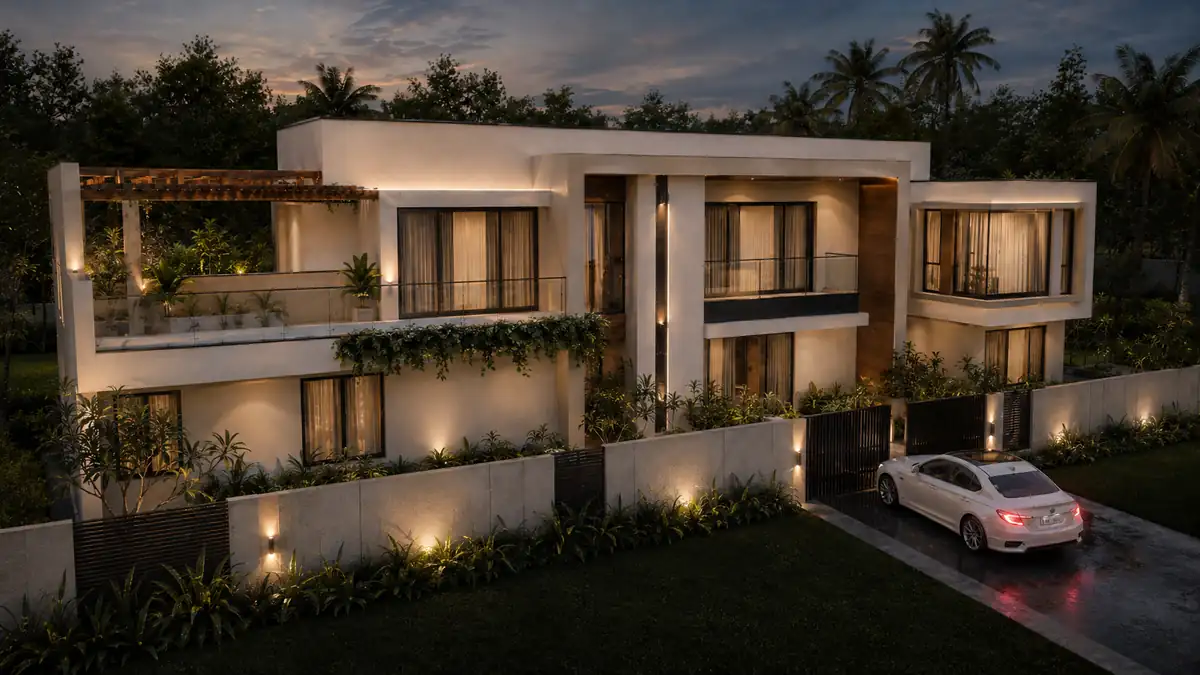
You will spend a few months choosing an architect and a few decades living with the choice. The good news is that the signals that matter are easy to check, and none of them require you to know anything about architecture. You only need to know what to ask, and what a straight answer sounds like.
Six warning signs, before anything else
If any of these appear in the first two meetings, the rest of this article can wait.
- ✗The fee is “we will adjust as we go”.
- ✗Every project on the website is a render, and nobody says so.
- ✗The first meeting is a menu of styles for you to pick from.
- ✗Nobody from the office has stood on your plot.
- ✗The drawings stop at the permit set, and the details are left to the site.
- ✗Nobody can tell you who reviews the site once construction begins.
Ask for work of your kind, and ask what got built
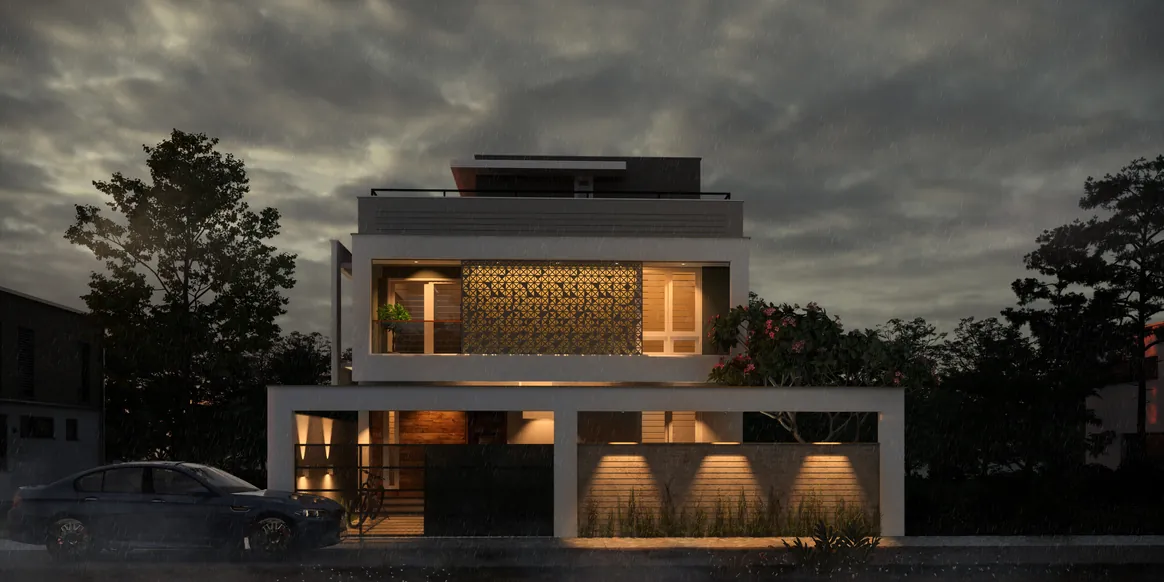
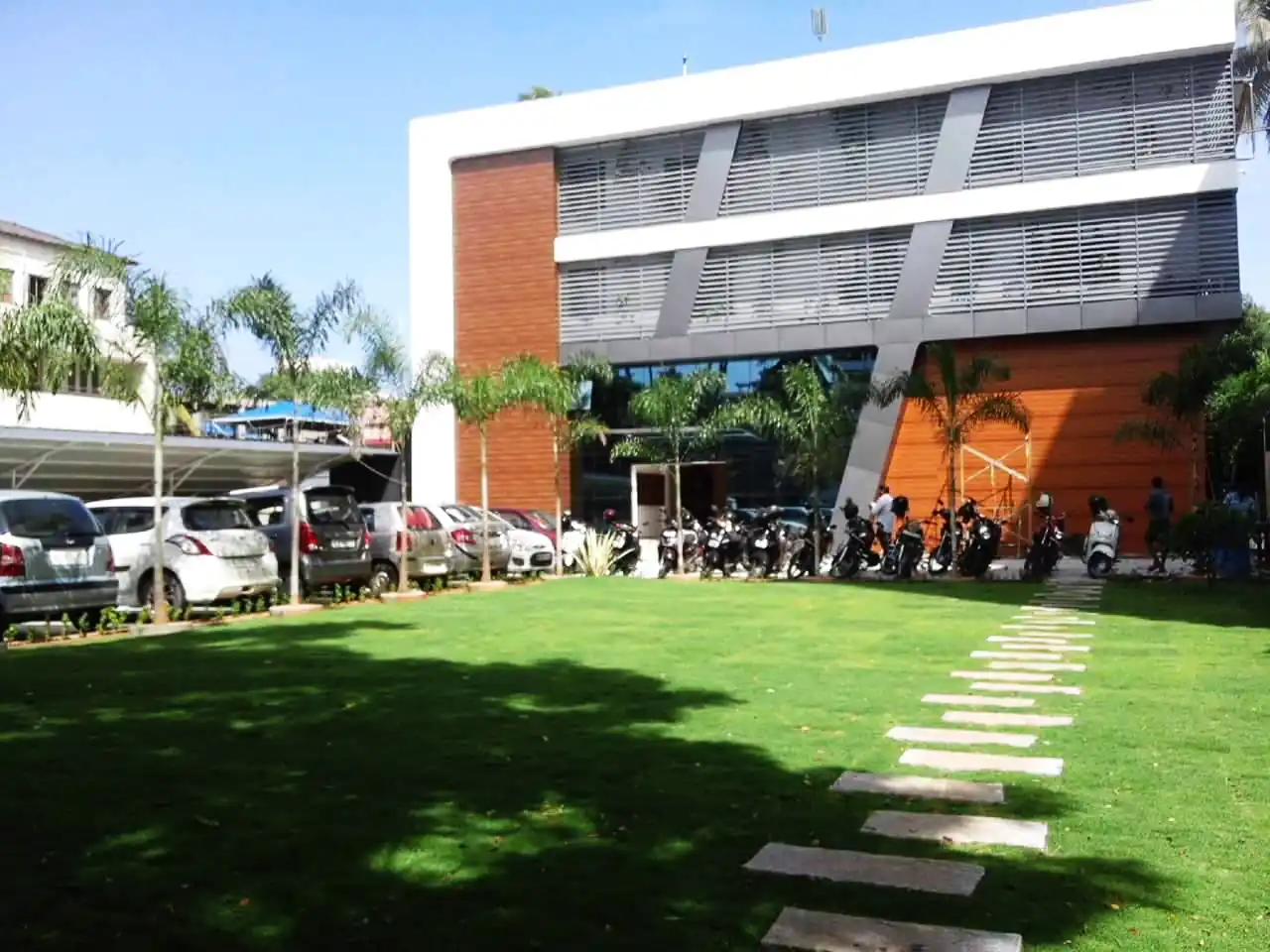
Every firm has beautiful images. The question is which of them exist. Ask to see projects like yours that were completed, and if you can, visit one. Ten minutes inside a real building tells you more than a hundred renders, because a render has never had a monsoon or a teenager.
A firm that is honest about which images are visualisations and which are finished work is showing you how it will be honest about everything else. We label ours. Ask anyone you meet to do the same.
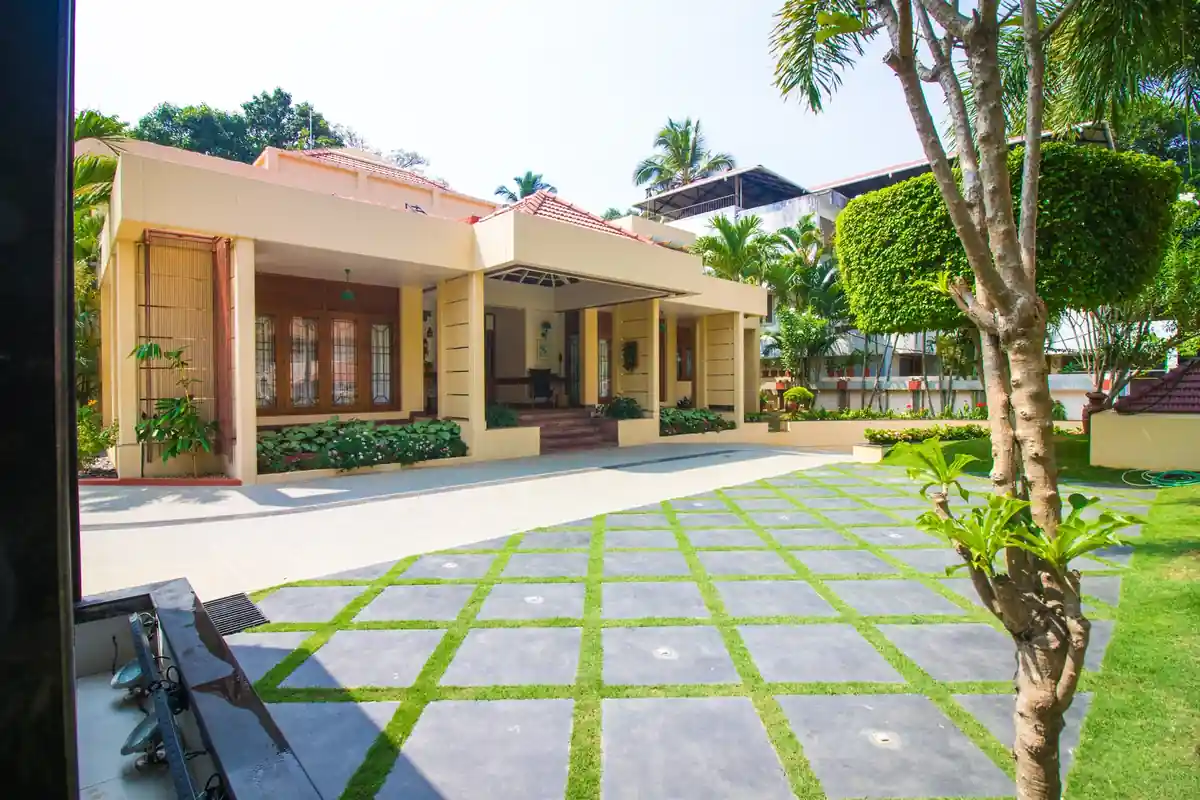
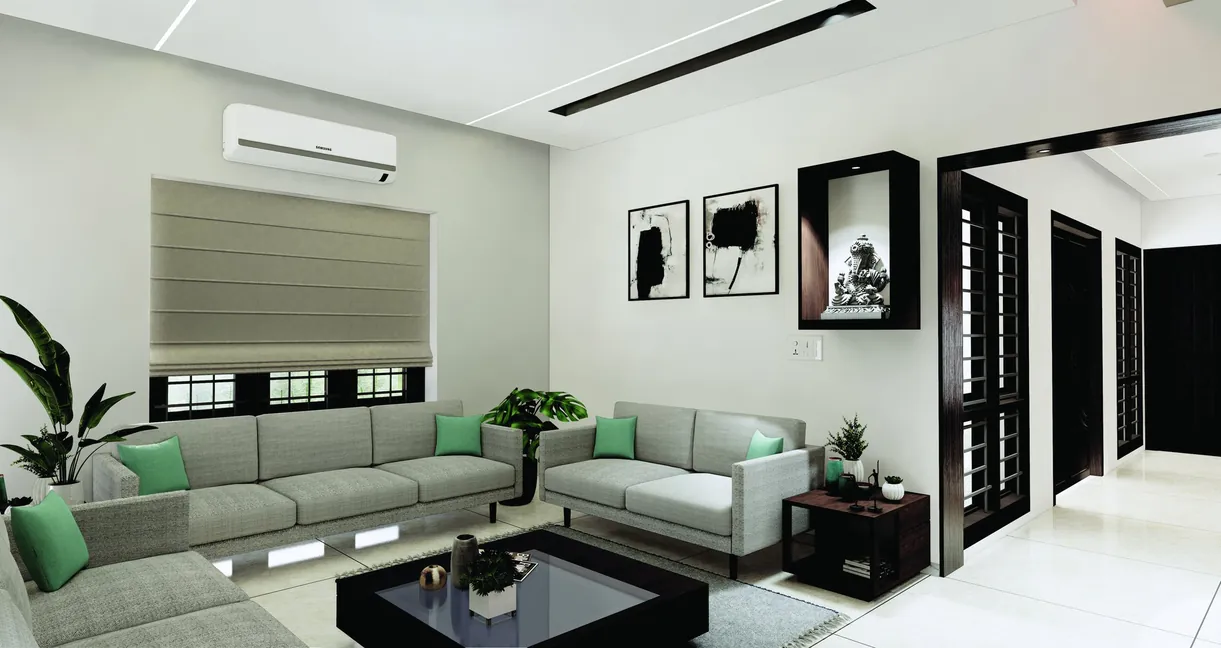
A render has never had a monsoon or a teenager.
The fee should arrive in writing, stage by stage
A serious practice will tell you, before you commit, what each stage of the work costs and what you receive at the end of it. Vagueness at this stage does not improve later. The fee being written down matters more than the fee being low, because a surprise bill mid-project costs more than any difference between two quotes.
The stages themselves are fairly standard across good practices. What varies is whether they are written down.


Ask which of these you are paying for, what you receive at each one, and what happens if you stop after the concept. A clear answer to the last question is the mark of a practice that has been asked it before.
Watch what they ask you
The tell in the first meeting is the direction of the questions. An architect who asks about your site, how your family actually spends its evenings, who cooks, who works from home, and what you want to spend, is designing already. One who opens with a portfolio of styles is selling a product, not studying your problem.
- Which way does the plot face, and where is the road?
- Who lives here, and who visits for how long?
- Which room will you be in at four in the afternoon?
- What does the budget have to cover, and what can it not?
- Contemporary or traditional?
- How many square feet?
- Which of these elevations do you like?
- When can we start?

In Trivandrum, ask specifically what they know about your plot’s area: the setback rules that apply, the road width, the drainage, the soil. A practice that works here answers from experience. A practice that works anywhere answers from a search.
Understand who stays on site
Drawings are half the job. Buildings are won or lost during construction, when a hundred small substitutions are proposed for convenience. A slightly cheaper tile. A window moved because the block-work was easier that way. A beam made deeper because the bar-bender had the wrong drawing.
Ask who from the firm visits the site, how often, and what happens when the built work does not match the drawing. The answer tells you whether you are buying a design or a designed building. They are different products, and the second one is the one you wanted.
If you are building from abroad
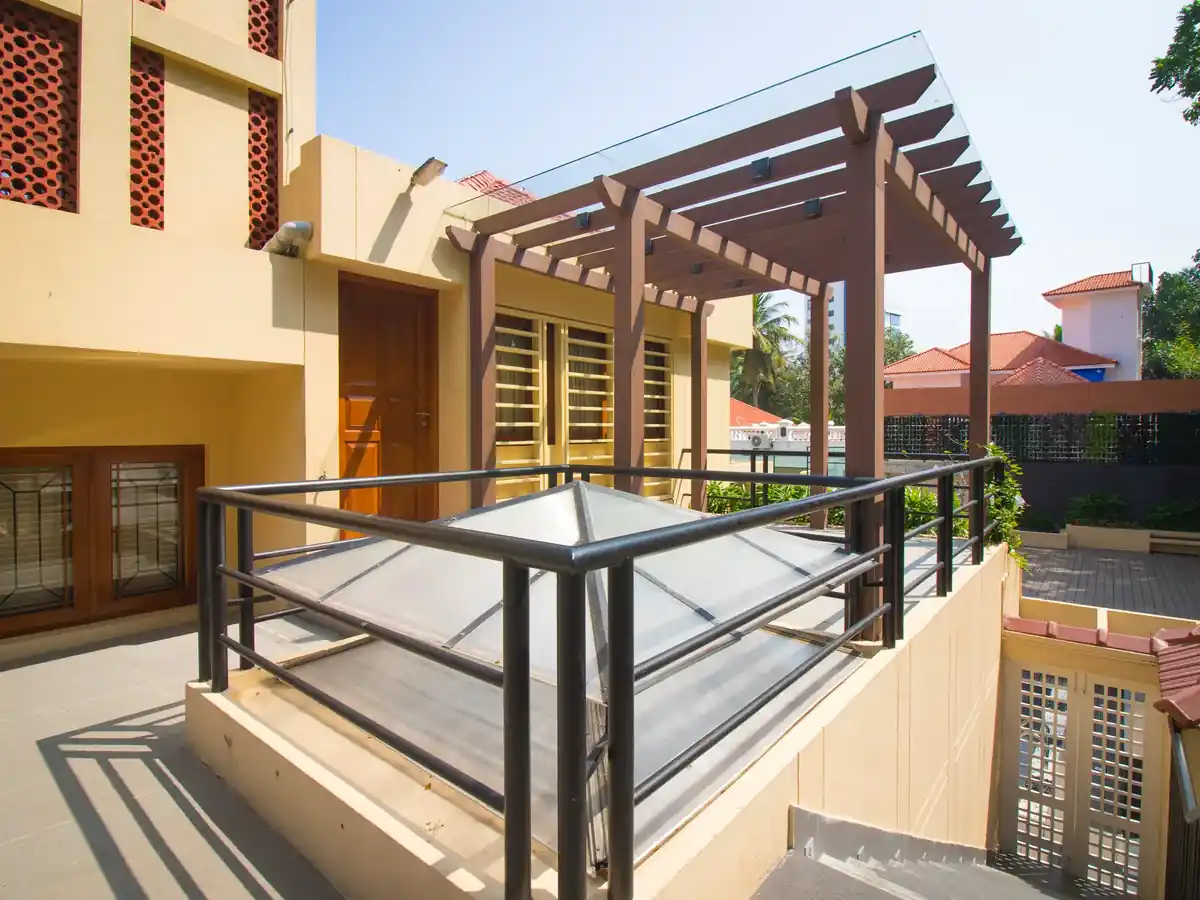
A great many Trivandrum houses are designed for families who are in the Gulf while it is built. The questions above matter more, not less, because you cannot drop by the site on a Sunday.
Ask how the firm reports progress, how decisions are taken while you are asleep, and who holds the drawings the contractor is working from. Distance is easy to manage. Silence is what goes wrong.
One last test
Ask the firm to walk you through one project, from first sketch to handover, including what went wrong. Every real project has a chapter that went sideways. A practice that can tell that story calmly has been through it and knows what to do next time. That, more than any award or image, is what you are hiring.

You are not hiring the drawings. You are hiring what happens when the drawings meet the site.
- Ask to see work like yours that was actually built, and if you can, stand inside one.
- The fee should arrive in writing, stage by stage, before you commit to anything.
- Notice the direction of the questions in the first meeting. A designer asks about you. A salesman shows you a menu.
- Ask who from the firm visits the site, how often, and what happens when the built work does not match the drawing.
Questions we get asked.
Do I need an architect for a small house?
Should I pay for a concept before committing to the whole design?
How do I compare two fee proposals fairly?
Tell us what you are building.
WhatsApp · Call +91 80899 88899 | Studio Radianz, Vazhuthacaud, Trivandrum 695 014